Commercial Dumpster Rental Vs. Roll-off Container: What's the Difference
Why Knowing the Difference Between Commercial Dumpster Rentals and Roll-Off Containers Saves You Money
Many property managers and contractors assume a commercial dumpster rental is the same as a roll-off container. In practice, the distinction matters for cost, compliance, and convenience. A commercial dumpster is typically a front-load container serviced on a regular schedule, ideal for ongoing waste from offices, retail, or multifamily buildings. A roll-off container is delivered empty and picked up full, better for construction debris, remodel projects, or one-time cleanouts. Local municipalities often require different permits for each. For example, a roll-off placed on a public street in Chicago needs a street occupancy permit, while a front-load dumpster in a private lot may not. Choosing the wrong option can lead to fines, missed pickups, or paying for unused capacity.
What Is a Commercial Dumpster Rental?
A commercial dumpster rental usually refers to a front-load container that stays on site. The hauler empties it on a set schedule — weekly, twice a week, or on call. These are common at strip malls, apartment complexes, schools, and office parks. Waste is typically general trash and recyclables. Size ranges from 2 to 8 cubic yards. The hauler uses a truck with arms that lift the container over the cab to dump it.
What Is a Roll-Off Container?
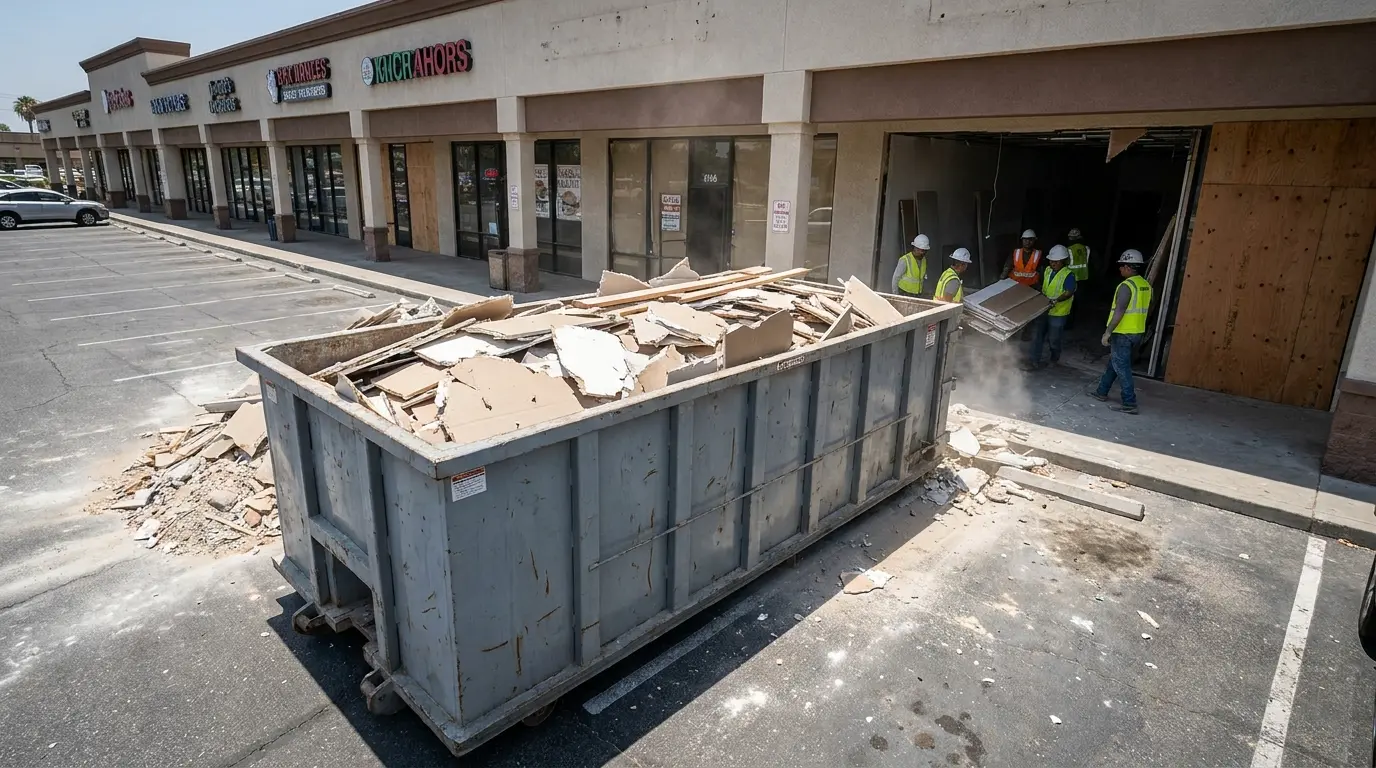
A roll-off container is a large, open-top box delivered by a specialized roll-off truck. The truck rolls the container off the back, hence the name. Sizes run from 10 to 40 cubic yards. Roll-offs are used for construction and demolition debris, roofing shingles, concrete, dirt, and large household junk. They are rented by the week or month. The hauler picks it up when full and replaces it if needed.
Key Differences in Size and Placement
Commercial dumpsters are smaller and fit in dedicated enclosures or loading docks. Roll-offs are bigger and need a clear, flat area on the ground. A 40-yard roll-off requires about 60 feet of space for placement. In tight urban alleys like those in Boston, a 20-yard roll-off may be the max size allowed by the fire department due to access requirements.
Many cities enforce a maximum placement duration for roll-offs to prevent them from blocking streets or sidewalks longer than necessary.
Permitting and Regulatory Requirements
Local permits for dumpster placement vary by jurisdiction. A front-load commercial dumpster in a private lot usually needs no permit. A roll-off on a public street or sidewalk requires a permit from the public works department. For example, in Los Angeles, you need a street use permit and proof of liability insurance. In New York City, the Department of Transportation issues permits for roll-offs on streets, and the fire department may require a distance of at least 10 feet from building openings.
OSHA has rules for container placement on construction sites: the container must be stable and not obstruct exit routes. EPA regulations apply to disposal of universal waste (like fluorescent bulbs and batteries). Many states, such as California and Massachusetts, have strict DEP/DEQ rules for recycling construction and demolition debris. If you put prohibited items like paint, tires, or electronics in a roll-off, you can face fines from the county health department and the state environmental agency.
Cost Factors and Pricing Drivers
Rates for commercial dumpster rentals are usually a flat monthly fee covering a set number of pulls. Extra pulls cost more. Roll-off rentals charge a flat fee for delivery, rental period, and disposal. Pricing differs by region due to landfill fees and transportation distances. In the Northeast, tip fees at landfills can be over $100 per ton. In rural Midwest areas, they may be half that. Seasonal weather also affects availability: during hurricane season in Florida, prices for roll-offs rise because of increased demand for storm debris cleanup.
Another cost driver is weight. Roll-offs load by volume, but you pay for actual weight at the disposal site. Exceeding the weight limit — usually 2 to 6 tons depending on size — triggers overweight charges. Commercial dumpsters have weight limits too, but since they are emptied regularly, overloading is less common.
When to Choose a Commercial Dumpster Rental
A commercial dumpster works best for businesses that generate consistent, daily waste. Think of a Dumpster Rental Guys commercial dumpster rental service for offices and retail. It keeps daily trash contained and is serviced on a schedule. It also reduces risk of illegal dumping because the container is typically locked or inside a fenced area.
When to Choose a Roll-Off Container
A roll-off is the right choice for short-term, high-volume projects. Renovations, roof replacements, large cleanouts, and new construction produce debris that won’t fit in a small dumpster. For example, a Commercial Dumpster Rental Service in Alabama often sees roll-offs used for roofing tear-offs that generate 15–20 cubic yards of shingles. The open top makes loading easy with a chute or excavator.
Regulatory Compliance Checklist
Before ordering, check your local rules:
-
Permit from municipal building department for street placement.
-
Fire marshal approval for containers near buildings.
-
OSHA safety rules for loading and handling.
-
State recycling mandates for C&D debris.
-
Hazardous waste bans — no paint, solvents, or electronics.
Working with a provider like Dumpster Rental Guys means they handle the permits and advise on compliance. This avoids the cost of a stop-work order or a fine from the EPA for illegal dumping.
Common Mistakes and How to Avoid Them
One common mistake is ordering a roll-off when you only need a small commercial dumpster. You pay for capacity you don’t use. Another is putting prohibited items in the container. In Illinois, the EPA fines individuals and businesses for mixing electronics with regular trash. A third mistake is not checking placement restrictions — a roll-off can block a fire lane and shut down a job site. Always verify with the local public works department or your rental company.
Bold the key terms throughout to draw attention: commercial dumpster rental, roll-off container, permits, OSHA, EPA.
The Bottom Line on Commercial Dumpster vs Roll-Off Container Rentals
The right choice between a commercial dumpster rental and a roll-off container depends on your waste volume, duration, and local regulations. Commercial dumpsters suit ongoing waste from businesses with daily trash. Roll-offs handle large, one-time debris from construction or renovation projects. Both require compliance with OSHA, EPA, and state DEP rules. Local permit costs and landfill fees vary by location. Before you order, talk to a provider like Dumpster Rental Guys. We can match you with the correct size, handle permits, and ensure you avoid fines. Contact us today for a free quote tailored to your project.
Frequently Asked Questions
What's the main difference between a commercial dumpster rental and a roll-off container?
Do I need a permit for a roll-off container on a public street?
Can I put hazardous waste in a commercial dumpster or roll-off?
Which option is cheaper for a one-week renovation project?
What size roll-off do I need for a full house cleanout?
Explore All Services
Browse all nationwide service options and choose the right fit for your project.
Office Cleanout Dumpster Rental for commercial properties across the US. Delivery varies by market, code rules, and property type. Get a quote today.
Call NowGet nationwide Retail Store Cleanout Dumpster Rental for any size job. Delivery varies by market and code. Reliable service for retail cleanouts across the US.
Call NowReliable Restaurant Renovation Dumpster Rental across the US. Delivery varies by market, code rules, and property type. Get a fast, accurate quote.
Call NowNationwide Warehouse Cleanout Dumpster Rental from Dumpster Rental Guys. Pricing and delivery vary by market, code rules, and property type. Get a quote today.
Call NowProperty Management Dumpster Rental for commercial cleanouts, renovations & tenant turnover. Delivery varies by market, code, and property type. Request a quote today.
Call NowNationwide apartment complex dumpster rental. Prices and local codes vary by market. Get a quote tailored to your property type and region.
Call NowSecure reliable Shopping Center Dumpster Rental across the US. Pricing and requirements vary by local codes, property type, and market conditions. Get a quote today.
Call NowNeed nationwide Industrial Waste Dumpster Rental? Dumpster Rental Guys offers reliable service across the US. Delivery and pricing vary by local codes and property type. Get a q...
Call NowTenant Turnover Dumpster Rental nationwide. Delivery times and rules vary by market, local codes, and property type. Get a quote today.
Call NowCommercial Renovation Dumpster Rental nationwide. Get a dumpster for office cleanouts, retail renovations. Delivery varies by market, code, and property type.
Call NowNationwide Commercial Flooring Removal Dumpster Rental. Prices vary by market, code, and property type. Get a fast quote today.
Call NowRetail Renovation Dumpster Rental from Dumpster Rental Guys. Service, pricing, and permit needs vary by market and property type. Get a quote today.
Call NowReliable Commercial Debris Removal Services across the US. Pricing and permits vary by market and property type. Get a quote for your project.
Call NowCommercial Drywall Disposal Dumpster Rental nationwide. Pricing varies by market, code rules, and property type. Get a quote today.
Call NowNationwide construction site dumpster rental by Dumpster Rental Guys. Pricing and permits vary by market. Call for a quote.
Call NowNationwide Commercial Waste Management Services from Dumpster Rental Guys. Pricing and delivery vary by market, local codes, and property type. Call for a quote.
Call NowBrowse by State
Choose your state or region to find local service coverage pages.
Need Nationwide Commercial Dumpster Rental Service?
We connect you with trusted local providers in your state or city. Call or email us today.