
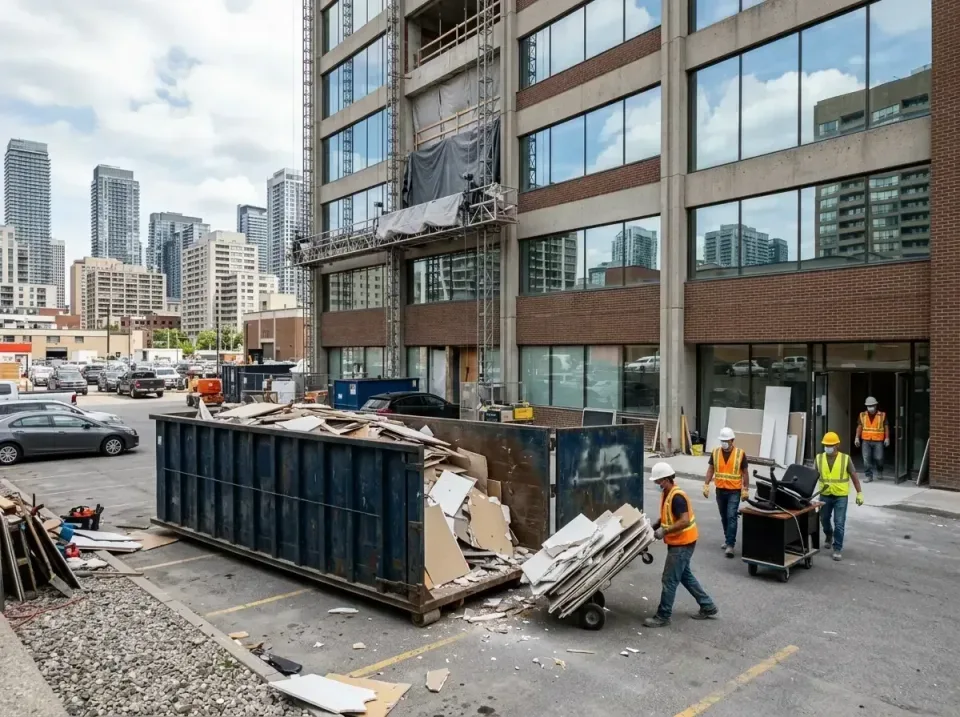
Small Dumpster Rental
Small containers help London homeowners, contractors, and property managers manage cleanouts, renovations, roofing debris, and light construction waste.
Can a dumpster reach a narrow alley without blocking your driveway? Yes, but the hauler must check tight-access conditions, truck clearance, and the planned placement first.
Measure the alley, gates, driveway width, overhead wires, and turning points before choosing a roll-off container. A hook-lift truck may suit an alley better than standard equipment.
In London, Ohio, share photos and measurements before booking. Tight-access delivery can prevent a dry run, which happens when the truck cannot safely reach the marked location.
Same-day delivery depends on routes and availability, so urgent cleanouts need early confirmation. Customers outside London can review all service areas before requesting a local delivery assessment.
Truck path: Measure the haul route, driveway width, and rear swing clearance before dispatch.
Container size: A 20-yard container often measures 22 feet long, so capacity must match the available footprint.
Heavy debris: Concrete and dirt belong in a suitable container because weight limits vary by material and hauler.
Safe loading: Keep roofing shingles, C&D debris, and household contents below the load line during transport.
Placement rules: Street placement may require local approval, while driveway placement needs stable ground and protection boards.
A container swap-out also requires a scheduled appointment when the first unit fills. Before loading, separate household hazardous waste, electronic waste, and scrap metal from ordinary municipal solid waste; dumpster disposal guidance can help frame those material questions.
The first decision is access, not capacity. Measure the narrowest alley point, driveway width, gate opening, overhead wires, and the level placement area before ordering.
A 20-yard roll-off container often measures 22 feet long, and the truck needs room beyond the container itself. Rear swing clearance can decide whether the driver approaches straight, backs in, or uses a different placement point.
Send clear photos showing curbs, parked cars, utility lines, fences, and branches. The delivery window should be confirmed before dispatch, with gates and access lanes unlocked during that window.
A hook-lift truck may handle tight-access delivery better than a cable hoist truck. If the route cannot support the planned equipment, changing the container location is safer than risking a dry run or driveway damage.
Choose a 10-yard container for a mini cleanout, a 15-yard unit for a small renovation, or a 20-yard unit for household remodeling. Larger 30-yard and 40-yard containers suit heavier construction volume, but their footprint may not fit an alley.
Volume and weight are separate limits. Portland cement concrete can make a container overweight before it looks full, while gypsum drywall and household junk usually consume more space than weight allowance.
For concrete and dirt dumpster rental, distribute heavy materials across the floor rather than piling them at one end. Ask how tare weight, or the empty container weight, combines with gross vehicle weight during hauling.
Roofing contractors should use a roofing dumpster rental when removing asphalt shingles. Keep tear-off materials below the load line and use a container tarp system when wind could scatter waste along the haul route.
If the alley is public, street placement may require a right-of-way permit from the local Department of Public Works. Confirm the approved location, pedestrian clearance, markings, and any restrictions before the container arrives.
The EPA Resource Conservation and Recovery Act separates ordinary municipal solid waste from regulated hazardous streams. RCRA Subtitle C controls hazardous-waste disposal, while a Subtitle D landfill generally handles permitted nonhazardous waste.
Separate paint, solvents, fuels, asbestos-containing material, and other household hazardous waste before loading. State landfill bans may also restrict tires, electronics, and appliances, so prohibited materials should be reviewed during booking.
OSHA 29 CFR 1926.252 addresses construction debris handling, while DOT hazardous-materials rules can require packaging and transport documentation. Waste container planning resources can help contractors organize material questions before dispatch.
A full container should be kept below its rim and reported before the project blocks access. Full containers require scheduled replacement appointments, so a container swap-out should be planned before demolition reaches its busiest stage.
Same-day delivery is availability dependent, and a late request may disrupt a roofing, remodeling, or estate-cleanout schedule. Weekend delivery scheduling can help, but the delivery window still depends on route capacity and equipment availability.
For active construction and demolition debris, place the container where workers can load it without reopening the alley repeatedly. Keep scrap metal and appliances separated when recycling or transfer-station routing requires source separation.
A driveway-safe placement can use protection boards or mats, but the surface must remain level. If the alley cannot provide safe clearance, Dumpster Rental Guys can help assess another placement point before a dry run occurs.
The best choice depends on access, waste type, and whether the project needs one pickup or repeated service. Weight limits vary by material and hauler, especially for concrete.
| Option | Best for | Key detail |
|---|---|---|
| 10-yard tight-access dumpster | Mini cleanouts | Smaller footprint; confirm alley clearance |
| 20-yard residential roll-off | Household remodeling | Often about 22 feet long; schedule pickup early |
| 30-yard construction container | C&D debris | More volume; check rear swing clearance |
| Concrete and dirt container | Portland cement concrete | Dedicated use helps manage weight limits |
| Commercial waste container service | Active job sites | Swap-out scheduling and weight-based disposal documentation |
Same-day delivery versus scheduled delivery depends on availability. For equipment and placement considerations, roll-off dumpster service information can help contractors compare access needs before booking.
Measure: Record alley width, gate openings, overhead wires, and the level placement area before requesting a quote.
Choose: Match a 10-yard, 15-yard, or 20-yard container to the debris volume and available footprint.
Mark: Mark the exact placement spot before truck arrival, keeping sidewalks and ADA routes clear.
Confirm: Confirm the delivery window before dispatch, then unlock gates and access lanes.
Protect: Install driveway protection boards before placement and protect asphalt where needed.
Separate: Remove household hazardous waste and other prohibited materials before loading; the EPA Resource Conservation and Recovery Act governs hazardous disposal, while EPA waste-management information provides useful terminology.
Load: Distribute heavy materials across the floor, keep debris below the rim, and schedule pickup after notification.
10-yard residential rental: $300–$600 for mini cleanouts; debris volume and rental duration are major drivers.
20-yard renovation rental: $400–$800 for household remodeling; weight and landfill fees affect the total.
30-yard construction rental: $500–$1,000 for larger C&D debris loads; tonnage and haul distance matter.
Concrete-only container: $400–$900; weight limits and the disposal site can change the charge.
Commercial recurring service: $150–$600 monthly, based on frequency and container size.
Capacity from 10-yard through 40-yard containers covers common projects, but a narrow alley may require a smaller unit. Regional conditions can change pricing. Final quotes vary by location, debris, access, permits, and duration.
Right-sizing container capacity means checking the work area against the truck path, not just estimating debris volume. A 20-yard container often measures 22 feet long, which can make a narrow alley placement impractical.
Measure overhead and side clearance, then compare the container footprint with the truck’s rear swing clearance. Ask about tare weight and gross vehicle weight when concrete, brick, or dirt is involved.
A container that fits the alley may still fail if the truck cannot deploy it safely. Confirm the access path, placement point, and swap-out plan before demolition begins.
A container swap-out should be scheduled before the first unit reaches capacity. For practical loading and haul-route planning, tight-access dumpster guidance can support the conversation with your hauler.
Common mistake: Measuring the container location but not the truck’s approach and turning space.
A narrow alley does not automatically prevent roll-off delivery. Measure the route, verify overhead and side clearance, choose a container that fits both volume and weight needs, and coordinate street placement permits when required.
The same preparation helps prevent roofing waste spills, overweight charges, prohibited-item fees, and a missed swap-out. Junk removal and estate cleanouts, landscaping debris removal, and portable toilet rental may also require careful access planning at busy properties.
For London, OH projects, Dumpster Rental Guys can review the alley measurements, debris type, placement point, and preferred delivery window. Start by requesting a quote with photos, dimensions, and the planned loading dates.

Browse all nationwide service options and choose the right fit for your project.
Small containers help London homeowners, contractors, and property managers manage cleanouts, renovations, roofing debris, and light construction waste.
Large containers help London homeowners, contractors, and property managers handle renovation, roofing, and construction debris.
Homeowners, contractors, and property managers book fast container delivery for cleanouts, remodeling, roofing, and construction jobs in London.
Homeowners and property managers book London dumpsters for household junk, estate contents, appliances, and remodeling debris.
Contractors and property owners in London can manage demolition, remodeling, roofing, and construction debris with the right roll-off container.
Homeowners, roofing contractors, and property managers book London containers for shingles, tear-offs, and other roofing debris.
Homeowners, landscapers, and property managers use London containers for brush, branches, stumps, and seasonal yard debris.
Commercial dumpsters help London contractors, property managers, and businesses handle construction, roofing, and cleanup debris.
Contractors and property managers book London roll-off containers for construction, industrial, roofing, and heavy debris.
Homeowners, property managers, and contractors use London dumpsters for junk removal, estate cleanouts, and landscaping debris.
Homeowners, landlords, and contractors use London containers for household junk, estate contents, appliances, and renovation debris.
Homeowners, contractors, and property managers book London containers for remodeling debris, drywall, roofing, and demolition waste.
Homeowners, contractors, and property managers use our London service for concrete, dirt, brick, asphalt, and other heavy debris.
Homeowners, contractors, and property managers book driveway-safe containers with surface protection in London.
Homeowners, contractors, and property managers use London scrap metal dumpsters for appliances, steel, and renovation metal.
Homeowners, contractors, and property managers book right-sized dumpster rentals for cleanouts, remodeling, and debris removal in London.
Front-load containers help London property managers, contractors, and businesses control recurring waste service.
Homeowners, contractors, and property managers book short-term dumpsters for weekend cleanouts, renovations, and debris removal in London.
Contractors and property managers book site dumpsters for portable toilet areas, event setups, and active London job sites.
Event organizers, venues, and property managers book temporary containers for clean, contained post-event cleanup in London.
Homeowners, contractors, and property managers can keep a right-sized dumpster on site for extended cleanups and active projects in London.
Homeowners, contractors, and property managers book controlled containers for asbestos waste and hazardous debris in London.
Homeowners, contractors, and property managers use our London containers for yard waste, recyclable debris, and green cleanup projects.
Local bulk waste & heavy material dumpster rental for London with clear pricing drivers, weight limits, and scheduling you can plan around.
Select your region to see local roll-off dumpster rentals providers and cities we cover.
We connect you with trusted local providers in your state or city. Call or email us today.