
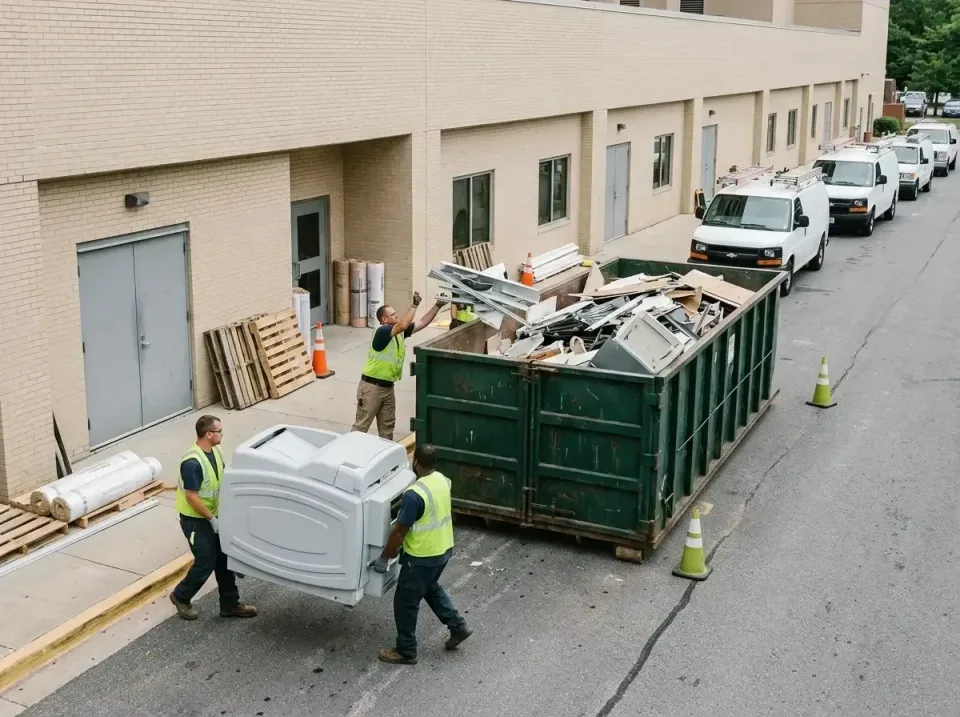
Small Dumpster Rental
Small containers help London homeowners, contractors, and property managers manage cleanouts, renovations, roofing debris, and light construction waste.
A 20-yard roll-off container usually fits many residential roof tear-offs, while larger roofs may need 30 yards. Roofing shingles and tear-off materials can spill during hauling when debris is piled above the rim.
In London, Ohio, estimate roof area, shingle layers, and other debris before choosing capacity. A roofing dumpster rental should leave room for safe loading rather than forcing workers to compress waste.
Keep asphalt shingles below the container rim and use a tarp system when wind threatens loose pieces. That protects the haul route and reduces cleanup around the driveway.
Dumpster Rental Guys can review roof size, access, and placement before dispatch. Their service areas help property owners understand broader roll-off coverage when projects extend beyond London.
Size first: A 10-yard container suits a small repair, while a 30-yard unit handles heavier construction and demolition debris.
Protect access: Measure the driveway and rear swing clearance so the roll-off container does not block garage use.
Watch vehicle weight: Gross vehicle weight includes the truck, container, and waste, so ask about weight limits before loading dense material.
Use the opening safely: The tare weight is the empty container weight, while the loaded scale reading reflects the entire vehicle.
Plan placement: Before delivery, confirm overhead and side clearance, then mark the location to avoid a failed delivery or dry run.
ANSI Z245.60 container standards relate to safe container construction, while London homeowners should still confirm site measurements. A regional dumpster provider directory can help contractors compare service footprints without treating capacity as unlimited.
A 10-yard container works for a small repair or single-layer tear-off. A 20-yard container often suits household remodeling, but its typical 22-foot length may overwhelm a short driveway. Choose 30 yards for a larger reroof, multiple layers, or added C&D debris. A 40-yard unit fits industrial-volume waste, though its footprint and loading height can complicate residential placement.
Measure roof squares, count shingle layers, and include felt, flashing, gutters, and sheathing. A debris pile exceeds container capacity quickly when crews add old insulation or gypsum drywall. Roofing contractors should request a swap-out plan if the project will produce more waste than one container can hold.
Asphalt shingles are bulky, but concrete, brick, and dirt create a different risk. A concrete dumpster versus mixed-debris dumpster comparison matters because weight limits, not cubic volume, can trigger an overage charge. Dedicated concrete and dirt dumpster service reduces overweight hauling risks.
Do not mix Portland cement concrete with ordinary roofing waste unless the hauler approves it. The transfer station may route loads differently, and disposal charges can change after weighing. Ask for weight-based disposal documentation and confirm the allowed tonnage before delivery.
The EPA Resource Conservation and Recovery Act governs hazardous waste controls, while a Subtitle D landfill generally receives approved municipal solid waste. Local providers such as portable site-service specialists may coordinate other job-site needs, but roofing debris still requires separate disposal instructions.
The load line is the top boundary that keeps debris below the container rim during transport. Shingles above that line can fall onto the road, damage nearby vehicles, or create a cleanup charge. Distribute material across the floor instead of building a heavy ridge near one end.
A container tarp system helps contain light scraps, but it cannot correct overloading. OSHA 29 CFR 1926.252 addresses construction debris handling, so crews should control loose material and keep workers away from unstable piles. Separate household hazardous waste, paint, solvents, and asbestos-related material before loading.
If old roofing contains suspected asbestos, stop work and arrange regulated handling under EPA asbestos rules. Do not place it in a standard roofing dumpster rental without approval.
Driveway placement is usually simpler than street placement, but the truck still needs a level surface and a clear path. Check wires, branches, gates, and turning space before dispatch. A cable hoist truck commonly handles standard placement, while tight-access delivery may require different equipment.
Street placement can require a right-of-way permit from the local public works authority. Keep ADA routes clear, protect asphalt with boards when needed, and mark the container location before the driver arrives. A local waste service resource may discuss site coordination, but Dumpster Rental Guys should confirm the actual London placement plan.
Schedule pickup after the roof is swept and the container is ready. If the crew works in phases, request a container swap-out rather than extending the rental without a pickup plan.
A 10-yard versus 40-yard decision depends on both capacity and footprint. Low-profile container options can help when a London driveway has limited visibility or overhead clearance.
A temporary rental suits a single reroof, while permanent commercial service fits recurring work. Tight-access and alley delivery should be discussed before dispatch, especially around older properties.
| Option | Best for | Key detail |
|---|---|---|
| 10-yard roofing dumpster rental | Small repairs | Compact footprint; confirm weight limits |
| 20-yard roll-off container | Typical home reroof | Household remodeling capacity; driveway length matters |
| 30-yard construction container | Multi-layer tear-offs | More room for shingles and C&D debris |
| 40-yard commercial container | Industrial-volume waste | Largest listed capacity; needs more placement space |
| Tight-access dumpster rental | Narrow alleys | Low-profile equipment and route review may help |
Before selecting a long-term unit, compare temporary rental versus permanent container service frequency. A waste-container service overview can illustrate broader site logistics, but the roof debris stream determines the container choice.
Estimate: Ask roofing contractors for roof squares, shingle layers, and expected yard waste or landscaping debris.
Choose: Compare a 20-yard container with a 30-yard unit, then allow room below the load line.
Inspect: Confirm eight-foot overhead clearance, wires, branches, driveway width, and gate access.
Mark: Paint or flag the placement area before the delivery window is confirmed.
Separate: Review prohibited materials, including household hazardous waste, electronic waste, and scrap metal.
Schedule: Arrange pickup or a swap-out after notification, then keep all debris below the rim.
The Solid Waste Association of North America and the National Waste & Recycling Association both emphasize orderly material handling. Waste Management may accept selected streams, but acceptance rules vary by transfer station.
10-yard residential rental: $300–$600: The main drivers are debris volume and rental duration.
20-yard renovation rental: $400–$800: A 20-yard container suits household remodeling, with weight and landfill fees affecting the final amount.
30-yard construction rental: $500–$1,000: Tonnage and haul distance can shift the price for larger tear-offs.
Concrete-only container: $400–$900: Weight limits and the disposal site matter more than volume.
Commercial recurring service: $150–$600 monthly: Frequency and container size shape the monthly rate for commercial waste container service.
London projects may differ from other Ohio locations because disposal routes, access, and permits are not identical. Final quotes vary by location, debris, access, permits, and duration.
Expert insight:
Plan the haul route before the first shingle enters the container. Same-day delivery depends on routes and availability, so a late request can disrupt a scheduled container swap-out.
A tipper fee may apply when a load needs special handling after reaching the transfer station. Keep roofing waste below the load line and photograph the container before pickup.
Street placement deserves a separate check because public space may require approval and reflective markings. Confirm where the truck will stand, not just where the box will sit.
Common mistake: Choosing a larger container without checking rear swing clearance, overhead wires, and the truck’s approach angle.
Most London roof tear-offs fit a 20-yard or 30-yard roll-off container, but roof layers and added C&D debris can change that estimate. The 10-yard through 40-yard range covers common projects, provided the material stays below the load line.
Full containers require scheduled replacement appointments, so arrange a swap-out before the crew runs out of working space. Separate prohibited items early to avoid unexpected disposal fees.
Dumpster Rental Guys can review roof volume, driveway access, street placement, and pickup timing for a practical quote. Their all service areas page shows broader coverage for contractors working across regions.
Measure the site, list every material, and request a right-sized roofing debris dumpster rental from Dumpster Rental Guys before tear-off begins.

Browse all nationwide service options and choose the right fit for your project.
Small containers help London homeowners, contractors, and property managers manage cleanouts, renovations, roofing debris, and light construction waste.
Large containers help London homeowners, contractors, and property managers handle renovation, roofing, and construction debris.
Homeowners, contractors, and property managers book fast container delivery for cleanouts, remodeling, roofing, and construction jobs in London.
Homeowners and property managers book London dumpsters for household junk, estate contents, appliances, and remodeling debris.
Contractors and property owners in London can manage demolition, remodeling, roofing, and construction debris with the right roll-off container.
Homeowners, roofing contractors, and property managers book London containers for shingles, tear-offs, and other roofing debris.
Homeowners, landscapers, and property managers use London containers for brush, branches, stumps, and seasonal yard debris.
Commercial dumpsters help London contractors, property managers, and businesses handle construction, roofing, and cleanup debris.
Contractors and property managers book London roll-off containers for construction, industrial, roofing, and heavy debris.
Homeowners, property managers, and contractors use London dumpsters for junk removal, estate cleanouts, and landscaping debris.
Homeowners, landlords, and contractors use London containers for household junk, estate contents, appliances, and renovation debris.
Homeowners, contractors, and property managers book London containers for remodeling debris, drywall, roofing, and demolition waste.
Homeowners, contractors, and property managers use our London service for concrete, dirt, brick, asphalt, and other heavy debris.
Homeowners, contractors, and property managers book driveway-safe containers with surface protection in London.
Homeowners, contractors, and property managers use London scrap metal dumpsters for appliances, steel, and renovation metal.
Homeowners, contractors, and property managers book right-sized dumpster rentals for cleanouts, remodeling, and debris removal in London.
Front-load containers help London property managers, contractors, and businesses control recurring waste service.
Homeowners, contractors, and property managers book short-term dumpsters for weekend cleanouts, renovations, and debris removal in London.
Contractors and property managers book site dumpsters for portable toilet areas, event setups, and active London job sites.
Event organizers, venues, and property managers book temporary containers for clean, contained post-event cleanup in London.
Homeowners, contractors, and property managers can keep a right-sized dumpster on site for extended cleanups and active projects in London.
Homeowners, contractors, and property managers book controlled containers for asbestos waste and hazardous debris in London.
Homeowners, contractors, and property managers use our London containers for yard waste, recyclable debris, and green cleanup projects.
Local bulk waste & heavy material dumpster rental for London with clear pricing drivers, weight limits, and scheduling you can plan around.
Select your region to see local roll-off dumpster rentals providers and cities we cover.
We connect you with trusted local providers in your state or city. Call or email us today.